
Earnest Money in Real Estate: What Buyers and Sellers Need to Know
- Jeana Beech
- Aug 3
- 5 min read

Earnest money is one of the first real financial commitments in a home purchase. It shows the seller that the buyer is serious. It also gives both sides a clear stake in keeping the deal on track.
This guide explains what earnest money does, how much buyers usually pay, where the money goes, and what can happen if the sale does not close.

What earnest money means
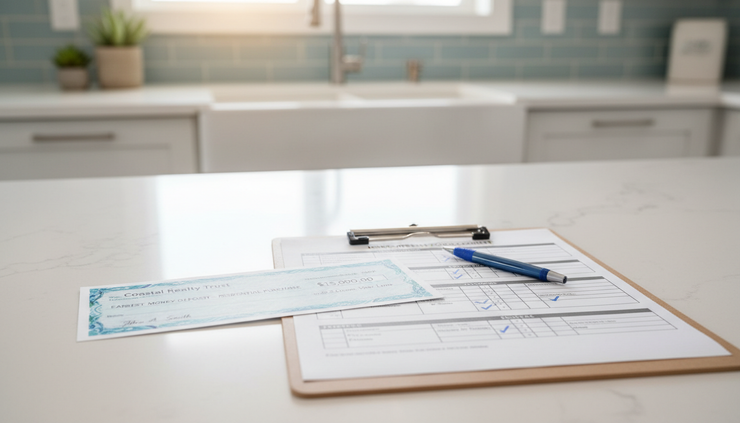
Earnest money is a deposit a buyer makes after the seller accepts an offer. It is often called a good faith deposit.
The deposit does not go directly to the seller right away. In most transactions, a neutral third party holds it. This is often an escrow company, title company, or real estate brokerage, depending on local practice and the purchase contract.
The purpose is simple. The buyer promises to move forward under the terms of the contract. The seller takes the home off the market while the buyer completes inspections, loan steps, appraisal, and other requirements.
That matters because a home sale takes time. During that time, the seller may stop showings, turn away other offers, and make moving plans. Earnest money gives the seller some protection if the buyer walks away without a valid reason.
For the buyer, earnest money can strengthen an offer. In competitive markets, including places like Santa Cruz and Carmel-by-the-Sea, sellers often look at the full offer package. Price matters, but so do terms, timelines, contingencies, and the deposit.
How much earnest money buyers usually pay
There is no single required amount across the United States. The amount depends on the market, property price, contract terms, and local custom.
A common range is 1% to 3% of the purchase price. In some markets, buyers may offer more. In slower markets, a smaller deposit may be accepted.
Here is a simple example:
Purchase price | 1% deposit | 3% deposit |
$500,000 | $5,000 | $15,000 |
$900,000 | $9,000 | $27,000 |
$1,500,000 | $15,000 | $45,000 |
A higher deposit can signal confidence. It can also increase risk if the buyer later defaults under the contract.
The right amount should match the buyer’s comfort level and the terms of the offer. A strong deposit does not replace smart protections. Buyers still need clear contingency deadlines and a full understanding of when the money may become nonrefundable.
How earnest money protects both sides
Earnest money is not just for the seller. It creates structure for the whole transaction.
For sellers, it helps protect against a buyer who ties up the property and then backs out without following the contract. If the buyer defaults, the seller may have a claim to the deposit, depending on the agreement and state law.
For buyers, earnest money shows seriousness while still allowing room for contract protections. Most purchase agreements include contingencies. These may let the buyer cancel and recover the deposit if specific issues arise within set deadlines.
Common contingencies include:
Inspection contingency
Allows the buyer to inspect the property and address defects, repairs, or other concerns.
Loan contingency
Protects the buyer if financing cannot be approved under the contract terms.
Appraisal contingency
Applies when the home appraises below the agreed purchase price.
Title contingency
Gives the buyer a chance to review title issues, liens, easements, or ownership concerns.
These protections only work when the buyer follows the contract. Deadlines matter. Written notices matter. Verbal agreements can create confusion and may not protect the deposit.
This article is for general information only. Real estate contracts and escrow rules vary by state and by transaction. Buyers and sellers should ask their agent, escrow officer, or attorney about their specific contract.
How the deposit is applied at closing
If the sale closes, earnest money usually becomes part of the buyer’s funds for the purchase.
It may be credited toward:
The down payment
Closing costs
Other buyer funds due at closing
For example, assume a buyer puts down $10,000 in earnest money. If the buyer later owes $80,000 at closing for the down payment and closing costs, that $10,000 is usually credited toward the total. The buyer would then bring the remaining $70,000, subject to the final closing statement.
The deposit is not an extra fee when the deal closes. It is part of the money already paid into the transaction.
Buyers should confirm where to send the deposit and how quickly it must be delivered. Many contracts set a deadline, such as a certain number of business days after acceptance. Missing that deadline can create problems.
Wire fraud is also a real risk in real estate. Always verify wiring instructions by calling a trusted phone number before sending funds.

What happens if the deal falls through
What happens to earnest money depends on why the deal falls apart.
If the buyer cancels under a valid contingency and follows the contract process, the deposit is usually returned. For example, a buyer may cancel during the inspection period after finding major foundation damage. If the contract allows that cancellation, the buyer may receive the money back.
If the buyer defaults after contingencies expire, the seller may be entitled to keep the deposit. For example, a buyer who changes their mind late in the process without a contract right to cancel may risk losing the money.
If the seller fails to perform, the buyer may have a right to recover the deposit. A seller might fail to provide clear title, refuse to complete agreed repairs, or decide not to sell after signing the contract.
Disputes can happen. Escrow holders often cannot release earnest money unless both parties sign written instructions or a legal process decides the issue. That is why clear documentation matters.
Buyers and sellers should keep copies of:
The signed purchase agreement
Addenda and contingency removals
Inspection notices
Cancellation forms
Escrow receipt records
Written communication about deadlines
Good records reduce confusion if the transaction does not close.

FAQ
Is earnest money required?
Not always, but most sellers expect it. An offer with no deposit may look weak unless there is a clear reason.
Who holds the earnest money?
A neutral party usually holds it. This may be an escrow company, title company, or brokerage, depending on the contract and local practice.
Can a buyer get earnest money back after an inspection?
Yes, if the contract includes an inspection contingency and the buyer cancels within the allowed period. The buyer must follow the written contract process.
Does earnest money go toward the down payment?
Yes, in most closed transactions. It is usually credited toward the buyer’s down payment, closing costs, or total cash due at closing.
Can the seller keep the deposit if the buyer cancels?
The seller may be able to keep it if the buyer defaults without a valid contract reason. The answer depends on the agreement, deadlines, and state law.
The main takeaway
Earnest money gives a home purchase structure. It shows the buyer’s commitment, protects the seller from lost time, and gives both sides rules to follow.
The key is knowing the contract before sending funds. Pay attention to the amount, deposit deadline, contingencies, and cancellation terms.
For help understanding how earnest money fits into a real purchase or sale on the Central Coast, contact Beech Realty.


Comments